


Global copper markets are entering a period of structural deficit, with supply unable to meet the rising intensity of use in data centers and green infrastructure.
This blog covers everything you need to know about investing in copper, and how Indian investors can actually buy the best copper ETFs.
Table of contents
Why are investors looking at copper exposure?
Copper has evolved into a strategic asset that serves as the bottleneck for the world's most critical technologies.
This has created a scenario where exploding demand from new sectors is colliding with a rigid, slow-moving supply chain.
Here’s why investors are looking to add copper to their portfolios:
1. AI and Data Centers
The AI revolution has emerged as a major new demand driver that was largely unforeseen a decade ago.
- Hyperscale Consumption: A single hyperscale data center can require thousands of tons of copper for its complex wiring, power distribution, and cooling systems.
- Rapid Growth: Global data center copper use is projected to grow six-fold by 2050, outpacing overall market growth, with AI infrastructure acting as the primary catalyst.
2. The Energy Transition
Copper is the backbone of global decarbonization. As economies shift away from fossil fuels, the "metal intensity" of energy generation is rising sharply.
- Electric Vehicles (EVs): A single EV requires approximately four times more copper than a traditional internal combustion vehicle.
- Green Infrastructure: Renewable energy projects, such as wind farms and solar arrays, along with the modernization of aging power grids, require massive amounts of cabling and wiring.
3. Supply Constraints and Market Dynamics
Despite surging demand, the global supply chain is struggling to keep up, creating a structural deficit.
- The 17-Year Lag: It takes an average of 17 years to bring a new copper mine from discovery to production. Supply cannot simply be "turned on" to meet today's spikes in demand.
- Operational Disruptions: Major mines, such as First Quantum’s Cobre Panama, have faced closures and operational issues, further tightening global supply just as demand is entering its steepest growth phase.
How can Indian investors buy copper?
Indian investors essentially have two paths for adding copper to their portfolio:
- Domestic Market: Buying copper-related stocks on Indian exchanges (NSE/BSE).
- Global Markets: Buying specialized copper ETFs and funds on international exchanges (like the LSE or NYSE) using currencies like the USD or EUR.
Currently, there are no dedicated copper ETFs listed on Indian stock exchanges.
While you can buy shares in domestic mining giants like Hindalco or Vedanta, these are large, diversified conglomerates.
- Hindalco is primarily an aluminum giant.
- Vedanta has significant interests in zinc, oil, and gas.
Why global markets are the best option for copper exposure
Investing in these companies gives you a "commodity basket" rather than a focused copper bet. If the price of oil drops or aluminum struggles, your copper investment could suffer even if copper prices are booming. This effectively dilutes your exposure.
Global stock exchanges offer the most direct way to invest in the theme. International markets provide a wide menu of specialized funds that allow you to isolate the copper opportunity without the baggage of other commodities.
Through global markets, Indian investors can access:
- Direct Price Funds: ETFs that track the physical price of the metal (using futures or physical holdings).
- Copper Mining Funds: Funds that invest exclusively in companies where copper is the primary revenue driver.
- Direct Stocks: Individual shares of global copper giants for investors who want to make targeted, high-conviction bets.
Types of global funds that provide copper exposure
Here is a detailed breakdown of the copper investment options you can access through global markets:
1. Direct Price Funds
These funds are designed to track the spot price of copper, but they achieve this in two very different ways:
- Physical Copper Funds: Unlike Gold ETFs, funds that hold actual copper bars are extremely rare due to high storage costs. Currently, the Sprott Physical Copper Trust is the only major fund that holds physical copper cathodes in warehouses. This offers the purest form of ownership without the complexities of futures contracts.
- Futures-Based Funds: Most "price" funds (like
CPERin the US orCOPAin Europe) do not hold physical copper. Instead, they use Futures Contracts to replicate the price. This gives you direct exposure to price movements but comes with "roll costs" (the cost of renewing expiring contracts).
2. Copper Mining Funds (Betting on the Business)
These ETFs invest in a basket of global companies (like Freeport-McMoRan, Antofagasta) that mine the metal.
- What you own: Shares in companies, not the metal itself.
- Pros: You often earn dividends, and miners can offer "operational leverage" (profits rise faster than the metal price).
- Cons: You take on company risks (e.g., labor strikes, political instability in mining regions).
3. Direct Stocks (Targeted Bets)
Buying individual stocks of global mining leaders is an option for investors.
- Examples: Freeport-McMoRan (FCX) (one of the world's largest publicly traded copper producers) or Southern Copper Corp (SCCO).
- Pros: Potential for massive returns if you pick a winning company.
- Cons: High risk. If that specific company faces operational issues, you lose money even if copper prices are going up.
Top copper funds you can invest in
Here are the top copper funds you can invest in, segmented by the type of exposure they offer.
1. Physical Copper Funds
These are the rarest type of funds. They hold actual copper cathodes in a warehouse, eliminating the risk of futures contracts.
Sprott Physical Copper Trust
- Ticker:
SPHCF - Exchanges: OTC.
- Structure: Closed-End Trust
- Note: This is currently the only major fund in the world that holds physical copper.

- Ticker:
2. Futures-Based Funds (Price Exposure)
These funds track the price of copper using futures contracts. They are the standard way to get "price-only" exposure in Europe and the US.
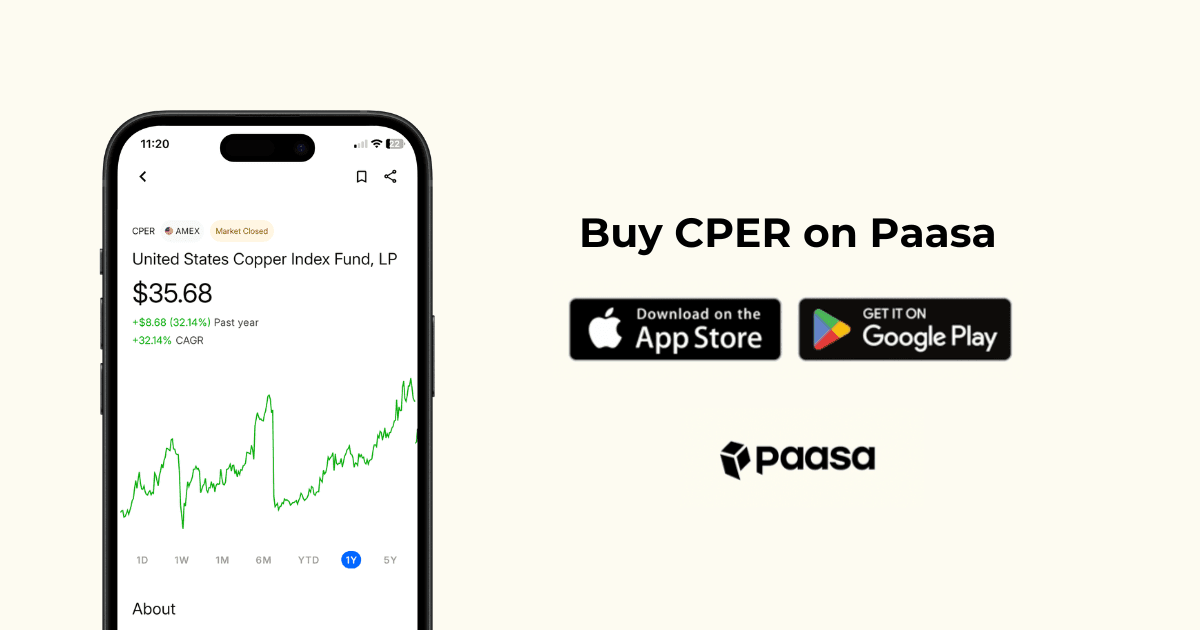
US Fund: United States Copper Index Fund
- Ticker:
CPER - Exchange: NYSE Arca
- Structure: Commodity Pool (Futures based)
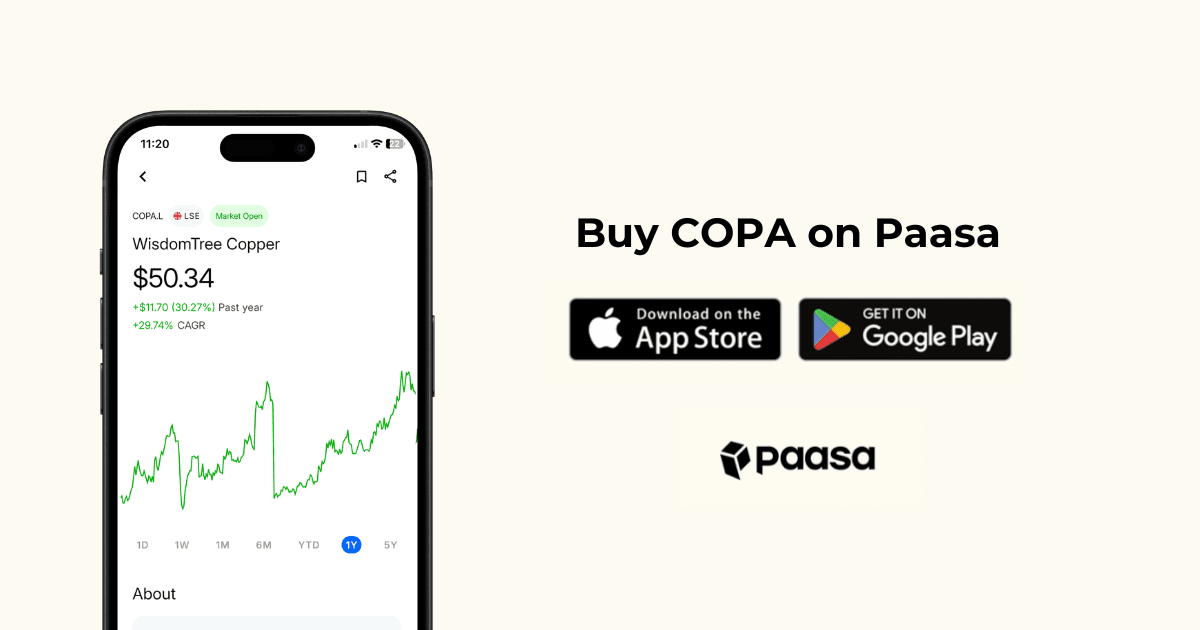
- European Fund: WisdomTree Copper
- Ticker:
COPA - Exchange: London Stock Exchange (LSE), Euronext
- Structure: ETC (Exchange Traded Commodity)
- Focus: Tracks the Bloomberg Copper Subindex.
- Ticker:
- Ticker:
3. Mining Funds (Equity Exposure)
These funds invest in a basket of copper mining companies. The US and European versions share the exact same ticker symbol but have very different tax implications.
- US Fund: Global X Copper Miners ETF
- Ticker:
COPX - Exchange: NYSE Arca
- Note: While liquid, this version is domiciled in the US and subjects you to US Estate Tax risks.
- Ticker:
- European Fund: Global X Copper Miners UCITS ETF
- Ticker:
COPX.L - Exchange: London Stock Exchange (LSE), Xetra
- ⚠️ Critical Warning: This fund has the same ticker (
COPX) as its US counterpart. Always ensure you are buying the Irish-domiciled (UCITS) version to avoid US Estate Tax risks.
- Ticker:

4. Direct Stocks
For investors who want to build their own basket of high-conviction miners.
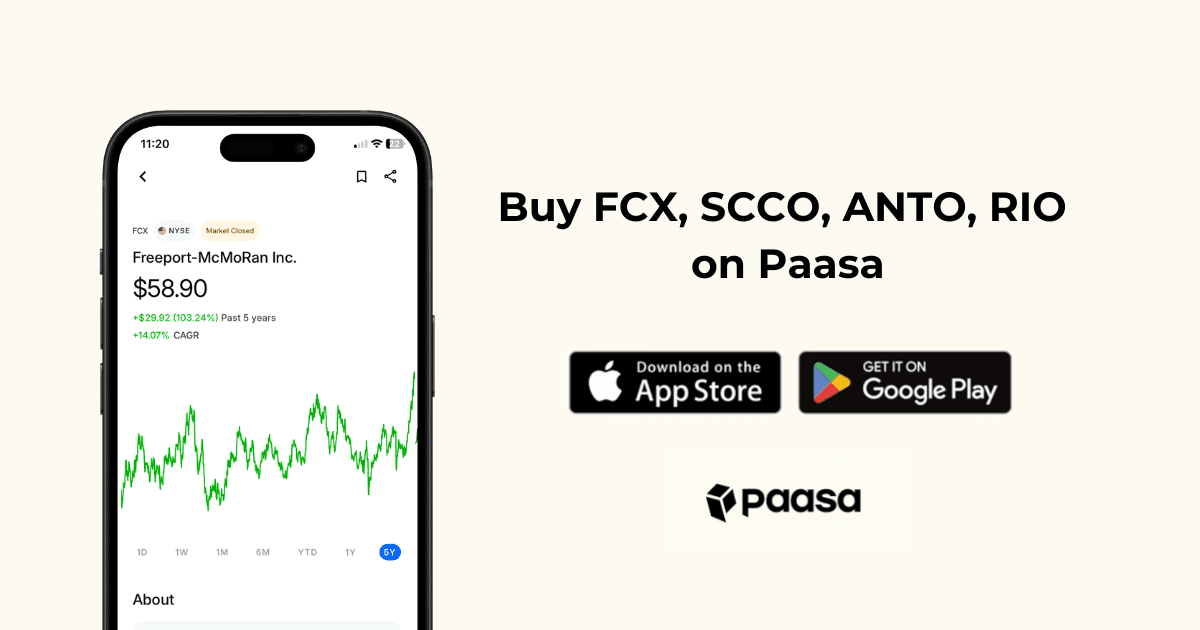
- US Stocks:
- Freeport-McMoRan (FCX): One of the world's largest publicly traded copper producers.
- Southern Copper Corp (SCCO): Known for having some of the largest copper reserves in the industry.
- You can invest in these stock using Paasa
- European Stocks:
- Antofagasta (ANTO): A major copper miner listed on the London Stock Exchange (LSE). It is one of the few large-cap "pure play" copper stocks available in Europe.
- Rio Tinto (RIO): A diversified giant listed on the LSE with significant copper.
- You can invest in these stock using Paasa
Which route is right for you?
Physical Copper Funds | Futures-Based Funds | Copper Mining Funds | Direct Stocks | |
Primary Goal | Own the actual metal (store of value). | Track copper price changes using contracts. | Capture the business growth of miners. | Outperform the market by picking winners. |
Dividend Income | None. | None. | Yes (Many miners pay dividends). | Yes (Depends on company). |
Key Risk | Liquidity/Premium: Can trade at a premium to the actual metal value. | "Roll Costs": Returns can drag due to contract renewals. | Company Risk: Strikes, politics, or poor management. | Concentration: High risk if the specific company fails. |
Leverage | None (1:1 with metal). | None (1:1 with price). | Operational Leverage: Profits can rise faster than copper prices. | High Leverage: Massive upside if the company succeeds. |
Best For | Long-term wealth preservation (Gold-like safety). | Short-to-medium term price speculation. | Long-term diversified growth portfolios. | High-conviction investors doing deep research. |
Why Indian investors should choose non-US copper funds
For Indians investing globally, where a fund is located should be an important consideration, as US-domiciled funds and stocks come with a significant taxation risk.
The United States enforces a strict Estate Tax on non-residents. If you hold US-domiciled assets (such as the US version of the COPX ETF or stocks listed on the NYSE) and pass away, the US government levies a 40% tax on the value of those assets above $60,000.
This means that in the event of an untoward incident, your heirs could lose nearly half of your US-based portfolio to the IRS before the money is even repatriated to India.
This risk makes US funds a poor choice for long-term wealth preservation.
Even for short-term traders, holding these assets carries an unnecessary risk; if an unexpected event occurs while the position is open, the tax implications for your family are severe.
For more information on how the Estate tax can affect your investments, read How the US Estate Tax Works for Indians and NRIs.
The Solution: Non-US Funds
Funds listed on non-US exchanges (European exchanges like the London Stock Exchange, Canadian exchanges like Toronto Stock Exchange, Hong Kong Stock Exchange, etc) do not carry this risk.
They also provide the same exposure to commodities (or stocks) as you can often buy the exact same underlying asset (e.g., the same basket of copper miners) via a European fund.
By choosing the non-US version of a fund, you get the exact same copper exposure but completely eliminate the risk of a 40% tax wipeout. For Indian investors, this structural safety makes non-US funds the superior choice.
Invest in copper ETFs with Paasa
Paasa is a truly global platform designed for the modern Indian investor. We provide direct access to over 10 global exchanges, including the United States, United Kingdom, Switzerland, Hong Kong, Germany, France, Canada, Netherlands, Japan, and Singapore.
This means you are not restricted to just US funds; you can buy all the global Copper ETFs, ETCs, and mining stocks listed on these exchanges from a single interface.
The Compliance Advantage
Paasa makes global investing easy and removes the compliance friction with a specialized layer built specifically for Indian residents:
- Schedule FA Reporting: We generate the exact reports you need for your Indian tax returns, eliminating the need for manual calculations.
- Tax Filing & Advice: Get access to expert tax advice and seamless filing support to handle your global capital gains and dividends.
- FEMA & LRS Integration: We provide guidance on FEMA regulations and LRS limits to ensure compliance.
Whether you are buying ETFs in London or direct copper sunds in US, Paasa provides the global access you need with the India-specific compliance you require.
What other commodities can I invest in with Paasa?
Paasa provides access to all commodities and stocks listed on global stock exchanges across US, Europe and Asia.
Disclaimer
This article is intended for information only and does not constitute investment, tax, or legal advice. The material is based on public sources and our interpretation of current regulations, which may change. Investing in global markets entails risks, including currency risk, political risk, and market volatility. Past performance does not predict future outcomes. Please seek advice from qualified financial, tax, and legal professionals before acting.

